TL;DR
Choose tools around the editorial workflow: story research, publication qualification, contact management, and personalized pitching. Start with a spreadsheet and a focused research tool, then add an outreach CRM when coordination becomes harder. Measure relevant coverage, referral visits, and search performance rather than link totals alone.
A journalist needs a story, not another request for a backlink. The best seo tools for digital PR outreach help teams find useful evidence, identify relevant publications, and manage pitches without treating editorial coverage as a link exchange. For founders and small businesses, a lean stack should support a repeatable process rather than create more dashboards. Earlyseo fits the content-planning side of that process, helping connect campaign topics with the website content that supports them.
Table of Contents
What are SEO tools for digital PR outreach?
SEO tools for digital PR outreach are research, planning, and relationship-management tools used to earn relevant editorial coverage. They help teams develop stories, assess publications, organize journalist contacts, send targeted pitches, and evaluate results. Their purpose is to support useful reporting and discoverability, rather than arrange reciprocal links.
Digital PR: Earning online editorial attention through newsworthy information, expert commentary, original analysis, or useful resources.
Search engine optimization: Improving a website's visibility and performance in search engine results.
Outreach CRM: A system for organizing contacts, pitches, follow-ups, and relationship history.
The distinction matters for campaign planning. A product launch might deserve coverage from a trade publication, while a regional pricing analysis could suit a local business reporter. Each needs a different angle, contact list, and supporting asset.
Editorial relevance comes first. A promising publication connects the story with an audience that has a reason to care.
Which tools belong in a lean digital PR stack?
A lean digital PR stack needs story research, prospect qualification, contact tracking, and measurement, but those functions don't require four paid subscriptions. A spreadsheet can handle the contact list during an initial campaign. Paid software becomes more useful when research volume, shared ownership, or follow-up tracking creates a clear operational need.
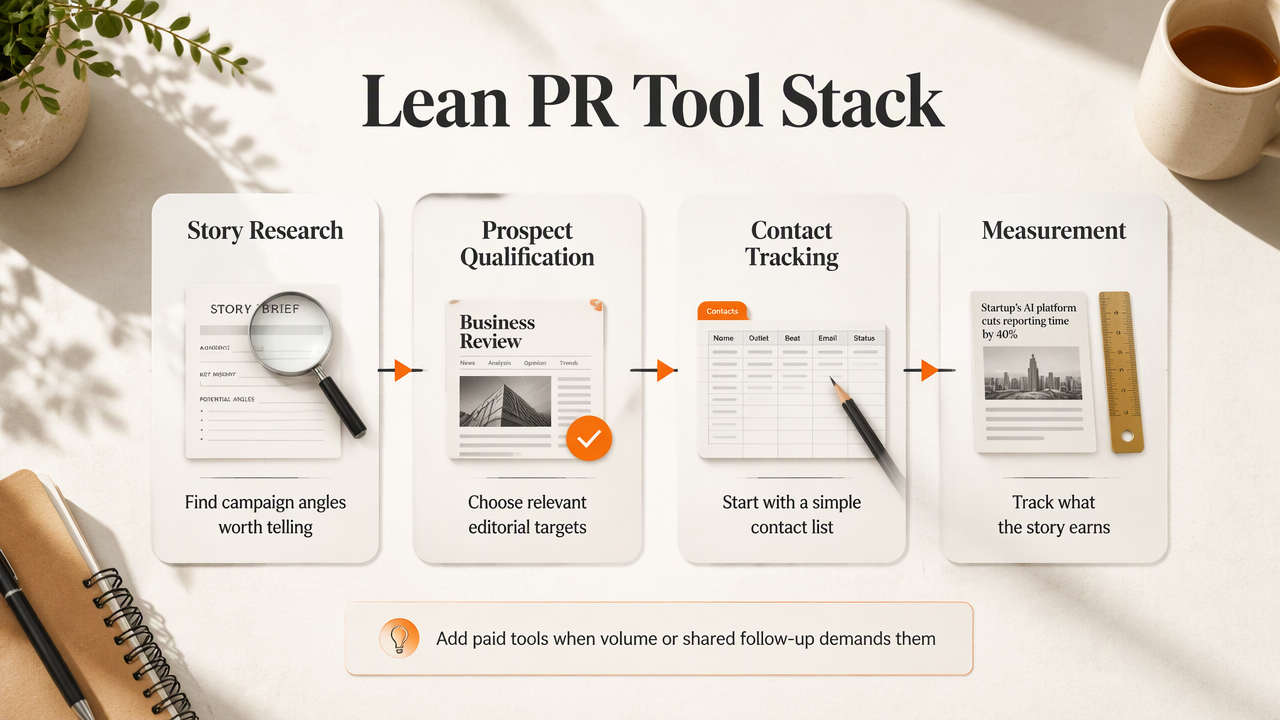
Tool roles across the editorial workflow
The most useful comparison is each tool's role in producing and distributing a credible story.
| Tool or category | Workflow role | Practical use |
|---|---|---|
| Earlyseo | Supporting content planning | Connect campaign topics with competitor-aware website content |
| BuzzSumo | Story research | Explore trending topics and content interest |
| Moz | SEO research | Add search research to publication assessment |
| BuzzStream | Outreach CRM | Organize list building, personalized pitching, and follow-ups |
| Mention | Media monitoring | Track mentions during a campaign |
| Spreadsheet | Contact management | Record contacts, evidence of relevance, status, and ownership |
For the content-planning layer, competitor-aware SEO content offers a relevant starting point for connecting search topics with supporting pages. BuzzSumo addresses a different task: exploring what attracts attention. BuzzStream belongs later, when the campaign needs organized outreach.
These roles aren't interchangeable. A trending topic doesn't establish a journalist's interest, and an SEO assessment doesn't establish editorial fit. The team still needs to read recent coverage before adding a prospect.
Who should pick which setup?
The right setup depends on campaign workload rather than company size alone.
- First campaign: Use a spreadsheet, manual publication research, and one clearly defined story.
- Recurring campaigns: Consider BuzzStream when relationship history and follow-ups need shared management.
- Topic-heavy campaigns: Consider BuzzSumo when finding angles is the main research task.
- Search-led planning: Use an SEO research tool when publication assessment and supporting content need search context.
Before purchasing, test the exact task that takes the most time. Compare current plan limits, contact exports, permissions, and cancellation terms rather than relying on a broad feature checklist.
How can teams turn research into editorial coverage?
- Define a story with a clear audience benefit.
- Build a source page containing evidence and methodology.
- Qualify publications by topic, audience, and recent coverage.
- Confirm the right contact and personalize the pitch.
- Record responses, respect declines, and measure resulting coverage.
This sequence keeps the campaign centered on reporting value rather than email volume.
Build evidence before building the contact list
A usable story starts with evidence that a reporter can inspect. Consider a local retailer comparing publicly listed repair prices across nearby towns. The supporting page should explain the collection dates, locations, categories, and exclusions so the findings can be understood without a sales call.
A campaign brief should include:
- A one-sentence finding or expert angle.
- The audience affected and why the timing matters.
- Data sources, methodology, and limitations.
- An available spokesperson and relevant credentials.
- A stable page containing the supporting material.
Local businesses can connect this work with a broader local business SEO plan. The campaign asset should also link naturally to relevant services or resources; an internal linking strategy helps make those connections useful.
Qualify journalists with a repeatable checklist
Publication qualification should combine editorial fit with audience relevance and practical contact details. Read a recent article, identify the reporter's beat, and record why the proposed story belongs there. A high authority score alone isn't enough.
For the repair-price example, a regional consumer reporter could be a stronger prospect than a national technology writer. The spreadsheet should record the publication, article reference, contact source, proposed angle, campaign owner, status, and any opt-out.
A pitch can stay short: the finding, its relevance to that reporter's readers, the evidence link, and spokesperson availability. One focused follow-up may be reasonable when it adds context. Repeated automated nudges after a decline aren't relationship building.
A smaller list of well-matched reporters is easier to research, personalize, and manage responsibly than a broad export of loosely related contacts.
How Earlyseo handles the supporting content
Earlyseo supports the website-content side of digital PR planning by connecting campaign topics with a broader SEO publishing process. A useful campaign asset needs a clear explanation, an accessible supporting page, and a place within the site's topic structure. This makes content preparation a distinct workstream alongside journalist research and outreach.
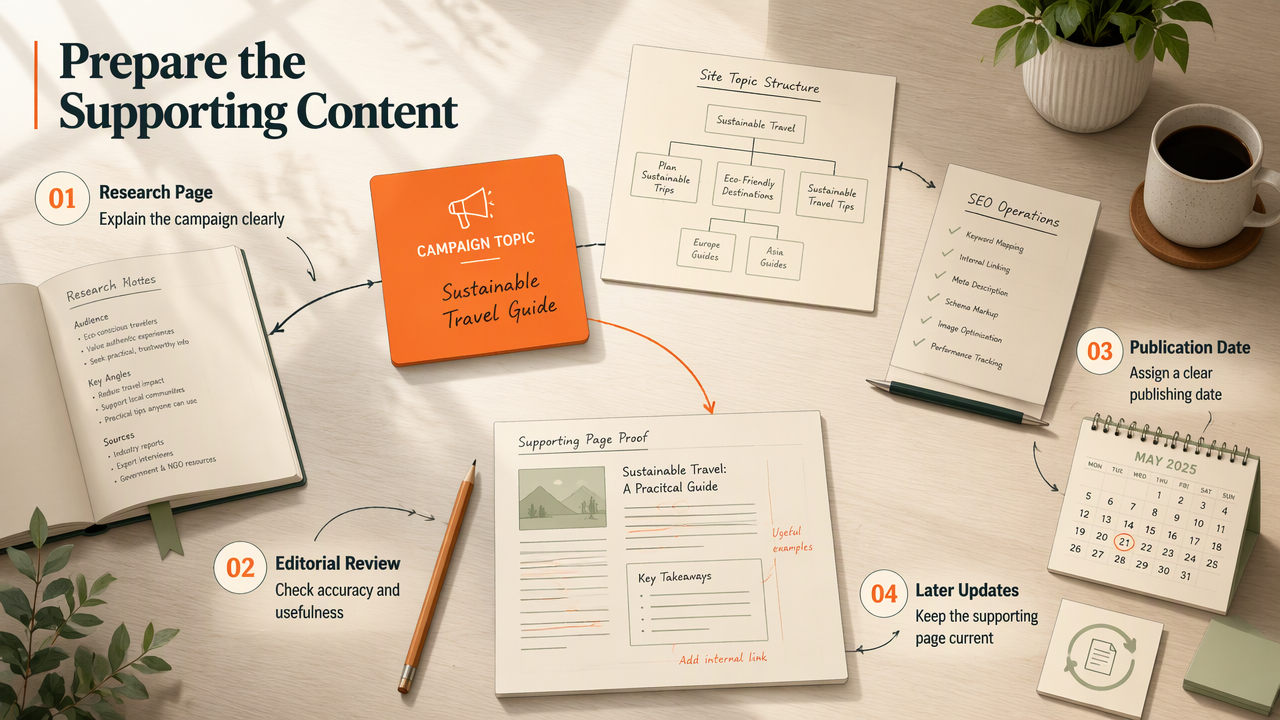
Give the campaign asset a clear publishing owner
A content operations plan should assign responsibility for the research page, editorial review, publication date, and later updates. The SEO operations feature is a relevant next step for teams organizing that publishing work.
The handoff can stay simple:
- Research owner: Documents sources and limitations.
- Content owner: Prepares the evidence page and related explanations.
- PR owner: Selects publications and manages conversations.
- Measurement owner: Records coverage and website outcomes.
As AI-assisted research becomes more common, inspectable evidence remains a sensible priority. Clear definitions, dated findings, and accessible methodology help both journalists and answer engines understand what a page actually supports.
Measure coverage separately from search outcomes
Digital PR measurement should distinguish earned coverage from later website performance. Record relevant articles, referral visits, editorial links, and meaningful inquiries separately. Then review impressions and clicks for the campaign asset and related pages over time.
A mention without a link can still reach a relevant audience. A link without relevant readership may contribute little business value. Neither result should be reduced to a single authority score.
The guide to tracking SEO progress without expensive tools provides an educational follow-up for teams building a basic reporting routine. Annotate publication dates and other site changes so search movement isn't automatically credited to outreach.
Frequently asked questions about PR tool selection
Tool selection works best when it follows a defined campaign, a clear research bottleneck, and responsible contact practices.
Can a small business run digital PR without paid outreach software?
A small business can begin with a spreadsheet, manual publication research, and ordinary email. The essential investment is time spent creating a credible story and checking journalist relevance. Paid outreach software becomes useful when shared contact history, campaign ownership, and follow-ups are difficult to maintain consistently, rather than simply because a campaign has started.
Should domain authority determine the outreach list?
Domain authority should be a supporting signal, not the main selection rule. Editorial relevance, audience fit, and a reporter's recent work provide better context for deciding whether a pitch belongs. A specialist trade publication or local outlet can be a sensible target when its readers closely match the people affected by the story.
Can automation replace personalized pitching?
Automation can support reminders, contact records, and campaign status, but the editorial judgment should remain human. A useful pitch explains why a particular reporter's audience would care about the evidence. Teams should verify AI-generated research, remove invented personalization, respect opt-outs, and avoid sending the same generic message to every contact.
Automate administration; keep story selection, evidence checks, and editorial relevance under human review.
Conclusion
Start with one defensible story, one evidence page, and a short list of relevant reporters. Select seo tools for digital PR outreach only after identifying the task that needs support. Teams preparing the publishing side can visit earlyseo.com, assign a content owner, and set a review date for both coverage and search outcomes.