TL;DR
Course creators should target learning problems, course comparisons, and enrollment searches with separate pages. Start with one course landing page and a small cluster of useful resources, then measure qualified leads and purchases rather than traffic alone. SEO supports ongoing discovery, while social media remains useful for launches.
A course can attract search traffic before its audience knows the instructor's name. SEO for online course creators connects real learning questions with useful lessons, credible course pages, and a clear path to enrollment.
Course SEO: The practice of making public course pages and educational resources discoverable in search engines for relevant learning and buying queries.
For 2026, the practical starting point is a focused topic, not a giant publishing calendar. Earlyseo offers a relevant option for organizing search-led content around a creator's subject expertise. The instructor's examples, teaching experience, and student evidence give that content its substance.
Table of Contents
What keywords should course creators target?
Course creators should target keywords that reveal a learning problem, a choice between solutions, or an intention to buy training. These three intent groups need different pages. A beginner searching for help with spreadsheets needs an answer first; someone comparing Excel courses needs course details and evidence.
Three search intents worth separating
Search intent determines the page format more reliably than a keyword's apparent popularity.
- Problem-aware: "how to build a cash flow spreadsheet" fits a tutorial, template, or sample lesson.
- Comparison: "Excel course vs Google Sheets course" fits a balanced comparison of skills, applications, and prerequisites.
- Course-intent: "Excel course for small business owners" fits a landing page explaining the curriculum, price, and learning outcomes.
These are illustrative queries, not verified search-volume estimates. A narrow query can be valuable when it closely matches the course and its intended students.
Choose topics the instructor can genuinely teach
The strongest starting topics sit at the overlap of learner demand, course relevance, and instructor experience.
A bookkeeping instructor might publish a worked cash flow example using clearly labeled sample figures. That resource demonstrates teaching quality while creating a natural route to a paid course.
Before writing, inspect current search results for page type, audience, and missing explanations. A competitor-aware content workflow can help organize that review. The goal is a better answer, not another copy of the ranking article.
A useful keyword earns its place by connecting a learner's question to a relevant next step.
Map each search intent to the right page
A course website needs distinct pages for brand discovery, enrollment, free learning, proof, and supporting questions. This page map gives each URL a clear job and creates routes from early research to purchase.
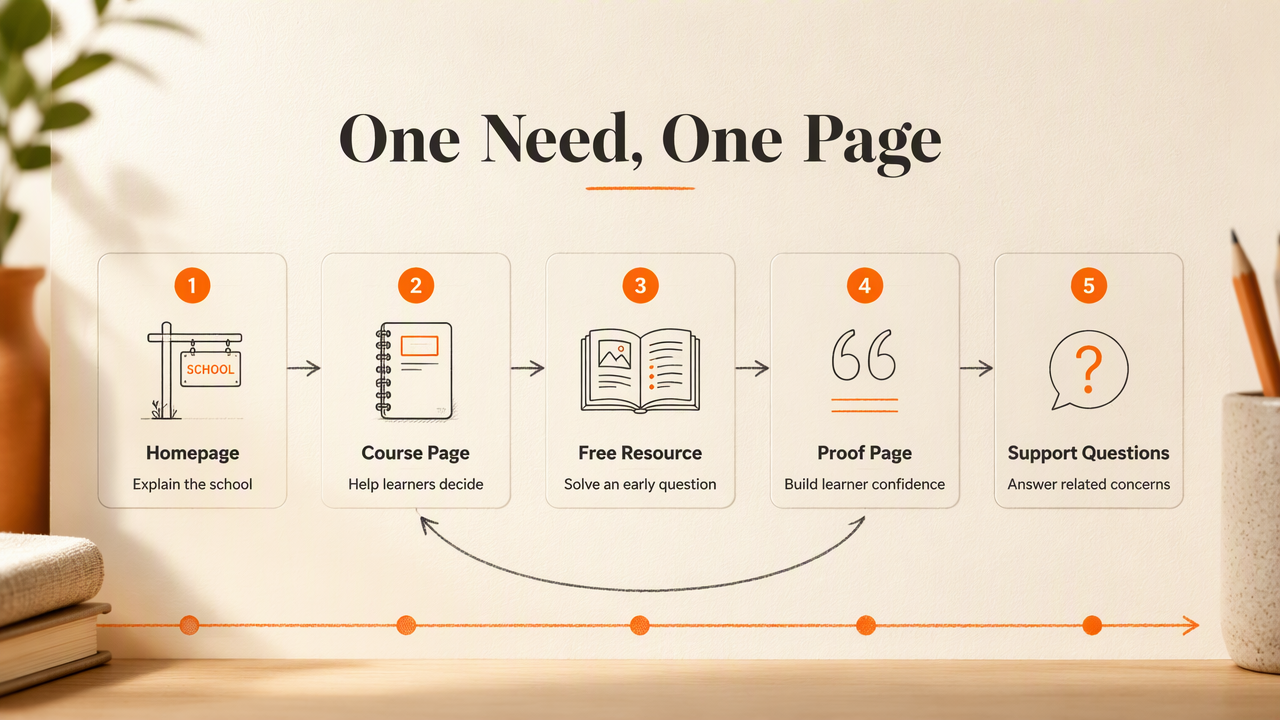
A five-part course website page map
Each page type should serve a different learner need rather than repeat the same sales copy.
| Page type | Main purpose | Example focus | Next step |
|---|---|---|---|
| Homepage | Explain the school and audience | Practical finance training for freelancers | Relevant course |
| Course landing page | Support an enrollment decision | Bookkeeping course for beginners | Purchase or consultation |
| Free resource | Solve a small learning problem | Cash flow spreadsheet template | Sample lesson or email signup |
| Testimonials page | Provide credible student evidence | Named learner experiences and work samples | Matching course |
| Supporting blog content | Answer related questions | How to categorize business expenses | Resource or course |
A testimonials page can support confidence without becoming a primary traffic target. Permission, specific context, and accurate descriptions matter more than a long wall of praise.
Connect pages around the learner's next question
Internal links should connect related tasks, not send every visitor straight to checkout.
An expense-category tutorial can link to a bookkeeping template. The template page can explain which course teaches the full monthly process. The course page can link back to a sample lesson for readers evaluating the teaching style.
A focused internal linking strategy helps keep those relationships clear. Descriptive anchors such as "beginner bookkeeping course" explain the destination better than vague labels.
Keep valuable public explanations accessible. A downloadable worksheet may require an email address, but the surrounding page should still answer a meaningful question.
How should course landing pages be optimized?
- Match the course landing page to one clear audience and primary search intent.
- Write a descriptive title, main heading, and opening summary.
- Explain outcomes, prerequisites, curriculum, format, and pricing.
- Add instructor credentials and verifiable student evidence.
- Check indexing, mobile usability, links, and enrollment tracking.
Replace broad promises with concrete course details
A strong landing page helps prospective students understand what the course teaches and whether it fits their starting point.
"Learn business finance" says little. "Build a monthly cash flow forecast using a downloadable spreadsheet" describes a task. Include the expected background, lesson format, access terms, and any software required.
Useful page elements include:
- A syllabus with descriptive module names.
- A sample lesson showing the instructor's approach.
- Pricing, payment options, and accurate refund terms.
- An instructor biography with relevant experience.
- Student examples presented with permission and context.
A course-focused content brief can keep these details consistent across writers and instructors.
Check what search engines can actually access
Public marketing pages need to be accessible independently of the private learning area.
A course hosted on Teachable, Thinkific, Kajabi, or another learning platform still needs checks for public URLs, indexability, mobile navigation, and working enrollment links. An attractive page won't explain the course to search engines if its essential content requires a login.
Keep paid lessons protected while publishing enough useful information to evaluate the offer. When structured data is used, it should accurately describe visible content and follow the applicable requirements. Markup doesn't guarantee a special search appearance.
Measure enrollment value and maintain content quality
Course SEO should be evaluated through qualified discovery, leads, and enrollments rather than page views alone. Google Search Console can show search queries and clicks, while analytics and checkout records help connect visits to business outcomes.
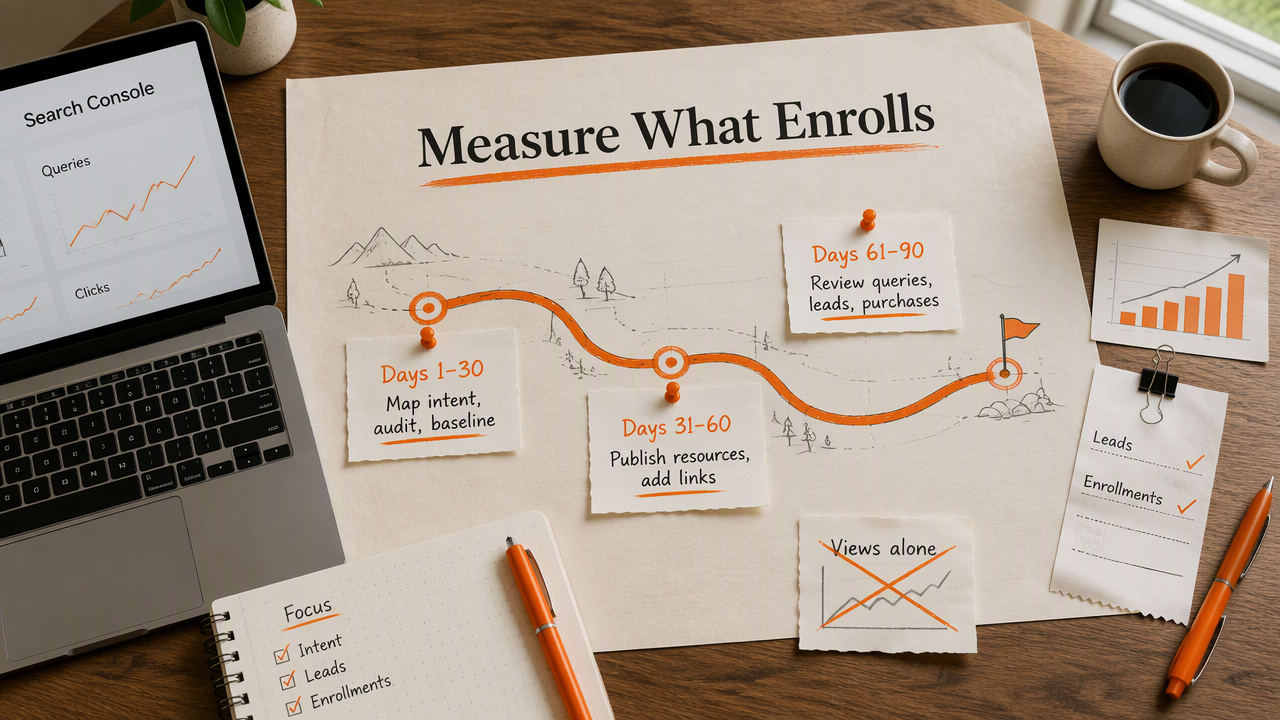
A focused 90-day testing sequence
A manageable test starts with one course and a small set of closely related resources.
- Days 1-30: Map intent, audit the course page, check tracking, and record a baseline.
- Days 31-60: Publish useful supporting resources and connect them with relevant links.
- Days 61-90: Review queries, leads, and purchases; improve pages attracting suitable learners.
This is a planning schedule, not a promise of rankings within three months. The 90-day SEO sprint offers a structure for organizing the work.
Separate branded searches from non-branded discovery. Also distinguish free-resource signups from purchases so reporting doesn't treat every action as equal.
How Earlyseo handles course content planning
Earlyseo provides a relevant planning option for creators organizing educational content around search demand.
The platform's content focus can support a repeatable process: select a learner question, assign a page purpose, prepare a brief, and review the finished explanation. Instructor input should supply the original demonstrations, subject knowledge, and course-specific details.
AI-assisted publishing in 2026 and beyond
AI-assisted publishing still needs human review of educational accuracy and evidence.
The 2021 review Artificial intelligence in the creative industries examines AI in creative work. The 2023 review Fake news, disinformation and misinformation in social media examines misinformation. Neither provides a course SEO performance benchmark.
For 2027 planning, clear definitions, original demonstrations, and transparent instructor credentials remain sensible investments across conventional and AI-assisted search. Predictions about guaranteed AI citations should stay out of enrollment forecasts.
Publish fewer lessons if necessary, but make every public explanation accurate, useful, and connected to a real course.
Course creator SEO FAQs
Course SEO decisions depend on audience fit, platform access, and the quality of public learning content.
A focused course site can start small; every page needs a distinct purpose.
How long does course SEO take to work?
Course SEO has no dependable universal timeline. Results depend on competition, site history, content quality, and whether pages can be indexed. An initial 90-day period is useful for checking implementation and early signals, not promising enrollment growth. Query relevance, qualified clicks, and leads help show whether the strategy is moving in a useful direction.
Can a course rank without a separate website?
A course can potentially appear in search through a public platform page, provided that page is accessible and indexable. A separate website offers more control over supporting resources, navigation, and brand presentation. The practical decision depends on the platform's capabilities and the creator's ability to maintain an additional site.
Should creators publish free lessons or protect everything?
Creators should publish enough free material to demonstrate teaching quality while keeping the paid course's full structure and support valuable. A sample lesson, worked example, or template can answer a narrow question. The paid offer can provide the complete sequence, practice activities, feedback, or other benefits that are genuinely included.
Conclusion
A practical next step for SEO for online course creators is to choose one course, map three search intents, and improve its landing page before expanding the blog. Publish one useful resource, add relevant links, and track its path to enrollment. For creators ready to organize that work with Earlyseo, earlyseo.com provides a starting point for exploring search-led content planning.