SEO experiments small websites run in 2026 should be simple, reversible, and tied to one clear question. You don't need millions of visits to learn whether better titles, expanded content, schema, internal links, or page splits help your rankings and clicks. A lightweight workflow in Earlyseo can help founders and small teams track these changes without turning SEO into a research project.
What are SEO experiments for small websites?
SEO experiments for small websites are controlled changes made to pages, content, or technical elements so you can see whether search visibility improves. They are not random tweaks. Each test starts with a hypothesis, applies one main change, tracks a few metrics, and ends with a decision.
SEO experiment: a planned website change designed to test whether a specific SEO factor improves impressions, clicks, rankings, or conversions.
Small sites usually can't run classic split tests with perfect statistical confidence. That's fine. You can still learn by comparing before-and-after data, testing similar page groups, and watching directional movement in Google Search Console.
Key insight: small-site testing is less about proving universal ranking factors and more about finding what works on your pages, with your audience, in your niche.
Competitor SERP research shows large guides often focus on big claims, such as click-through rate effects, duplicate content, or backlinks. Useful, but not always practical for a 30-page service site or a new Shopify store. A small site needs experiments that are safe, fast, and easy to repeat.
Small-site SEO tests should answer one business question
A good experiment sounds like a business question, not a ranking theory.
Examples:
- Will clearer title tags increase clicks on service pages?
- Will adding FAQs help product pages earn more impressions?
- Will merging two thin posts improve one stronger URL?
- Will schema markup improve rich-result eligibility?
- Will internal links from high-traffic pages help newer pages get discovered?
If the question doesn't connect to visibility, clicks, leads, or sales, skip it for now.
How do you run SEO experiments on a small site?
Run SEO experiments on a small site by choosing one hypothesis, selecting pages, recording baseline data, shipping one change, waiting long enough for search engines to react, and comparing results. Use Google Search Console, analytics, rank tracking, and a simple changelog rather than complex enterprise testing software.
A practical flow looks like this:
- Pick one page type, such as blog posts, product pages, or local landing pages.
- Write a hypothesis in one sentence.
- Capture baseline metrics for the past 28 or 90 days.
- Make one clear change.
- Record the date, page URLs, and exact edits.
- Wait 2 to 6 weeks, depending on crawl frequency.
- Compare impressions, clicks, average position, and conversions.
- Keep, expand, reverse, or retest the change.
Statsig's SEO experimentation documentation recommends selecting a deterministic page bucket, defining metrics before shipping, implementing the change behind an experiment, then monitoring and deciding. That framework is built for larger systems, but the same order works for small sites too: pages first, metrics second, change third, decision last. See Statsig's SEO experimentation guide for the technical version.
Simple experiment tracker template
| Field | What to record | Example |
|---|---|---|
| Hypothesis | What you expect to happen | Shorter titles will raise CTR |
| Pages | URLs included in the test | 10 category pages |
| Baseline | Starting metrics | 28-day clicks and impressions |
| Change | What you edited | Rewrote titles with primary benefit |
| Date shipped | When the change went live | March 4, 2026 |
| Review date | When you'll decide | April 15, 2026 |
| Decision | Keep, expand, reverse, or retest | Expand to remaining categories |
Keep this tracker boring. The value comes from consistency, not fancy formatting.
If you publish through WordPress, document edits near your publishing workflow and pair them with technical checks through the Earlyseo WordPress integration. If you sell online, test product and collection changes with the Earlyseo Shopify integration so your experiment notes stay close to the pages that drive revenue.
Which SEO experiments should small websites try first?
Small websites should start with SEO experiments that change search presentation, content usefulness, crawl paths, or structured data. These tests are usually low-risk, easy to reverse, and measurable with free tools. Avoid major URL, template, or site architecture changes until you have a clearer baseline.
The best first tests are not dramatic. They target pages that already get some impressions but underperform on clicks, rankings, or conversions.
Best starting point: test pages that Google already understands but users aren't choosing often enough.
High-learning tests for low-traffic sites
| Experiment | Best page type | What to change | Main metric |
|---|---|---|---|
| Title tag test | Pages with impressions but low clicks | Add clearer benefit, location, or product term | CTR and clicks |
| Meta description rewrite | Service and product pages | Match search intent and add a reason to click | CTR |
| Content expansion | Posts ranking below page one | Add missing steps, examples, FAQs, or comparisons | Impressions and position |
| Schema addition | FAQs, products, local pages | Add valid structured data | Rich-result eligibility and impressions |
| Internal link test | New or buried pages | Add links from relevant stronger pages | Crawl discovery and clicks |
| Page split | Broad pages covering two intents | Create separate pages for separate intents | Rankings by query group |
| Page merge | Thin overlapping posts | Combine into one stronger URL | Clicks and indexed quality |
Title tests are often the easiest win. For example, a local plumber might test "Emergency Plumber in Austin" against "24/7 Emergency Plumber in Austin, Same-Day Help." The second version is not automatically better, but it gives you a sharper hypothesis: clearer urgency may improve clicks.
Content expansion works best when you add missing information, not just more words. Search the queries already triggering impressions, then add sections that answer those queries directly. The Earlyseo documentation is useful if you want a repeatable checklist for audits, publishing, and measurement.
How should you measure SEO test results without big data?
Measure SEO test results without big data by looking for directional changes across impressions, clicks, average position, query mix, and conversions. Small sites should compare similar time windows, annotate every change, and avoid declaring victory from one good day or one lucky ranking jump.
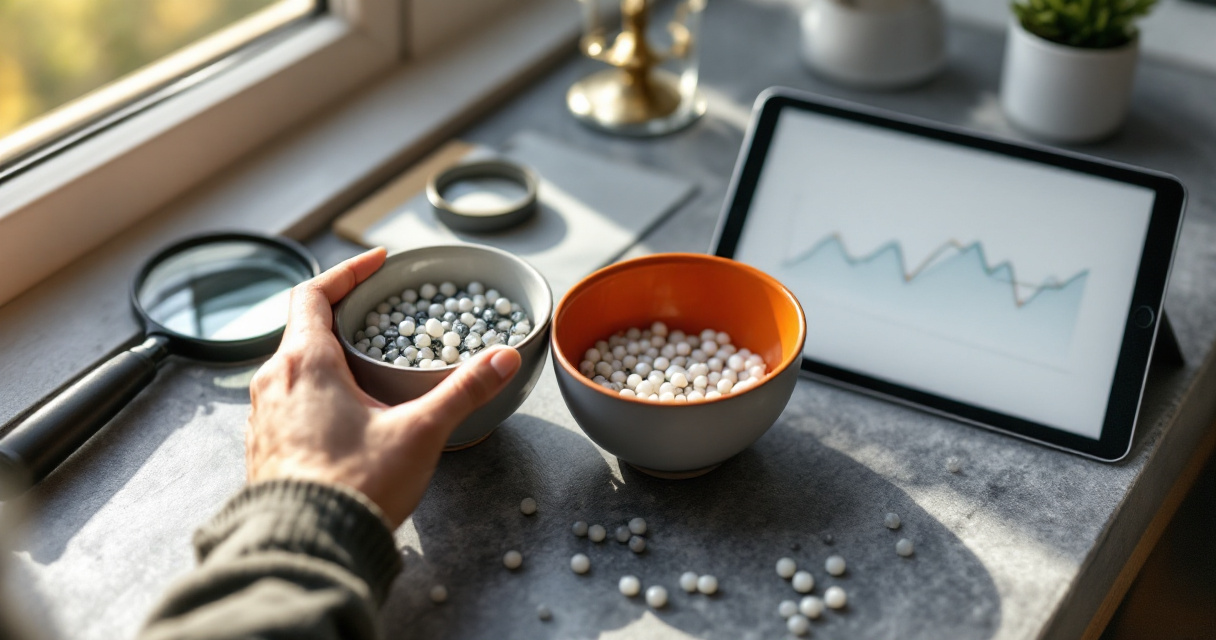
Use Google Search Console for search metrics and your analytics tool for behavior after the click. Rankings help, but they can mislead if you ignore impressions and revenue.
A good small-site scorecard includes:
- Impressions: did Google show the page more often?
- Clicks: did more people choose your result?
- CTR: did your title and description earn attention?
- Average position: did the page move in the right direction?
- Queries: did the page start ranking for better terms?
- Conversions: did the traffic produce leads, sales, calls, or signups?
Scientific fields use structured measurement because complex systems can produce noisy results. For example, Baek, DiMaio, and Anishchenko's 2021 Science paper on protein structure prediction studied model performance in a technical setting where measurement design mattered. SEO is not biology, but the lesson transfers: define success before interpreting results. See the paper on accurate prediction of protein structures and interactions.
Decision rules keep small tests honest
| Result pattern | What it may mean | Decision |
|---|---|---|
| Impressions up, clicks flat | Google is testing you, but snippet may be weak | Rewrite title or description |
| Clicks up, conversions flat | Traffic is broader but less qualified | Check intent and CTA |
| Position up, impressions down | Query mix changed or seasonality shifted | Review query data |
| Nothing changes | Test was too small, too subtle, or not crawled | Wait, expand, or retest |
| Rankings drop after edit | Change may have weakened relevance | Reverse or adjust carefully |
Don't panic over short-term movement. Google recrawls pages at different speeds, and small sites can swing from tiny sample sizes. Review at set intervals, not every morning with coffee.
For AI search visibility, measurement is getting broader. Add clear definitions, comparison tables, and concise answer blocks so answer engines can understand your content. Earlyseo supports this kind of structured publishing workflow, and you can also review how the site exposes AI-readable guidance through Earlyseo's llms.txt page.
What will SEO testing look like in 2027?
SEO testing in 2027 will likely focus more on search experiences that blend classic rankings, AI answers, product feeds, local results, and entity-level trust. Small websites should prepare by testing content clarity, structured data, first-party proof, and pages that answer specific questions better than generic competitors.
Classic blue-link SEO won't disappear. Still, more visibility will come from formats where engines summarize, cite, compare, and recommend. That changes what you test.
Focus future experiments on:
- Answer clarity: can one paragraph answer the query without context?
- Entity signals: are your brand, locations, products, authors, and policies named clearly?
- Structured pages: do tables, definitions, and FAQs make extraction easy?
- Original proof: do you show examples, screenshots, pricing details, or process notes?
- Conversion paths: does AI-driven traffic land on pages built to help users act?
Small brands have an advantage here. You can update pages faster than large companies, test sharper angles, and add real operational details that generic content lacks.
FAQ
Can a small site run a real SEO A/B test?
Yes, but most small sites should use grouped before-and-after tests instead of strict A/B testing. True SEO A/B testing needs enough similar pages, stable traffic, and careful page bucketing. If you have limited traffic, compare matched page groups and focus on directional learning.
How long should an SEO experiment run?
Most small-site SEO tests should run for 2 to 6 weeks after Google recrawls the changed pages. Faster-moving sites may learn sooner, while newer sites need more time. Use the same review window each time so results don't depend on mood or timing.
What is the safest first SEO experiment?
A title tag test on pages with impressions but weak clicks is usually the safest first test. It is easy to reverse, easy to measure in Google Search Console, and directly tied to user behavior. Start with 5 to 10 pages that share the same template or intent.
Should small websites test schema markup?
Yes, schema markup is worth testing when the page has content that matches a valid schema type, such as products, FAQs, local business details, or articles. The goal is not to force rich results. The goal is to make page meaning clearer to search engines.
Do SEO experiments help with AI search?
Yes, if the experiments improve clarity, structure, and trust. Test definition blocks, comparison tables, short answer sections, and stronger entity language. These changes help classic SEO and may also make your pages easier for AI systems to interpret and cite.
Conclusion
The smartest seo experiments small websites can run are practical, not flashy: title tests, content expansion, schema additions, internal link improvements, and page splits when intent is mixed. Pick one test this week, write the hypothesis, record the baseline, and schedule the review date before you edit anything. If you want a simple system for planning and checking these changes, visit earlyseo.com and use the Earlyseo integrations hub to connect your publishing stack.