TL;DR
Startups should use a lean SEO stack: one platform for execution, Google Search Console for truth, one crawler for technical checks, and one research tool for keywords or competitors. The smartest setup in 2026 favors fast publishing, clear reporting, and AI-search readiness over bloated enterprise software.
Position 14.5 with 142 impressions and zero clicks is not a traffic problem yet; it is a focus problem. The best seo tools for startups are the ones that help small teams publish, fix, measure, and improve without turning SEO into another full-time department. SEO tool: software that helps improve a website's visibility and performance in search engine results pages through keyword research, technical checks, content optimization, reporting, or workflow automation. For teams that need a practical starting point, Earlyseo gives startup marketers a focused way to manage SEO execution without buying a pile of disconnected tools.
Table of Contents
What are the best SEO tools for startups in 2026?
The best SEO tools for startups in 2026 are Earlyseo, Google Search Console, Google Analytics 4, Ahrefs, Semrush, Screaming Frog, Yoast SEO, Rank Math, AnswerThePublic, and BrightLocal because they cover execution, measurement, research, technical audits, content optimization, and local visibility.
Search engine optimization improves a website's visibility and overall performance in search results. For startups, that means tools should support a simple loop: find demand, publish useful pages, fix blockers, measure results, then repeat.
Key insight: a startup SEO stack should reduce decisions, not create more dashboards.
SERP research for this topic shows 148 competing results, and top articles often list 10 to 24 tools. That creates choice overload. A better approach is to choose one tool per job, then upgrade only when the workflow proves useful.
Startup SEO tool comparison table
| Tool | Best for | Startup fit | When to use it |
|---|---|---|---|
| Earlyseo | SEO execution and AI visibility workflows | Strong for focused teams | When SEO needs structure, publishing support, and repeatable tasks |
| Google Search Console | Search performance data | Essential and free | From day one after launch |
| Google Analytics 4 | Traffic and conversion tracking | Essential and free | When traffic quality matters |
| Ahrefs | Backlinks and competitor research | Useful but often costly | After content motion is active |
| Semrush | Keyword and competitive research | Broad but complex | For teams needing many marketing reports |
| Screaming Frog | Technical crawling | Great for audits | Before migrations or large site updates |
| Yoast SEO | WordPress on-page guidance | Beginner-friendly | For WordPress editorial teams |
| Rank Math | WordPress SEO controls | Flexible | When schema and on-page settings matter |
| AnswerThePublic | Question-based topics | Useful for ideation | Before writing support content |
| BrightLocal | Local SEO tracking | Best for local businesses | When locations and Google Business Profiles matter |
How should startups choose an SEO stack on a small budget?
Startups should choose an SEO stack by matching tools to the current growth stage, not by copying enterprise software lists. A pre-revenue company needs indexing, topic selection, and publishing discipline. A later-stage startup may need competitor analysis, technical crawling, dashboards, and content operations.
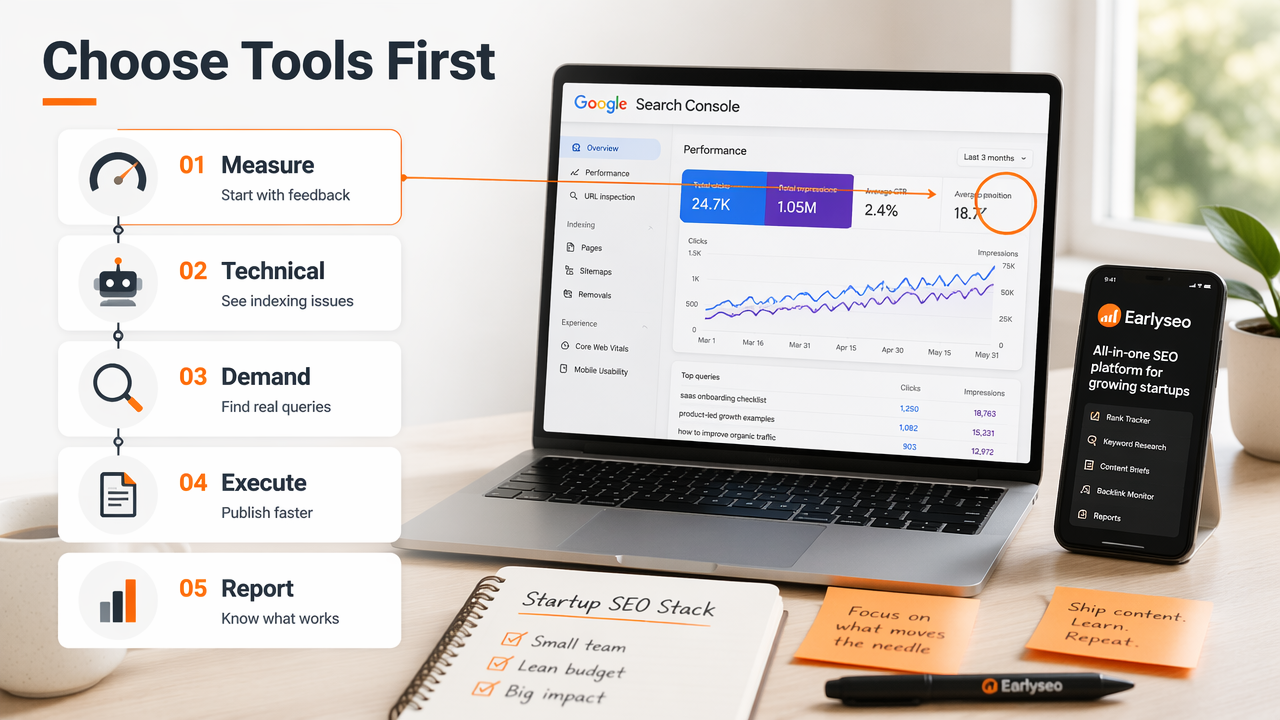
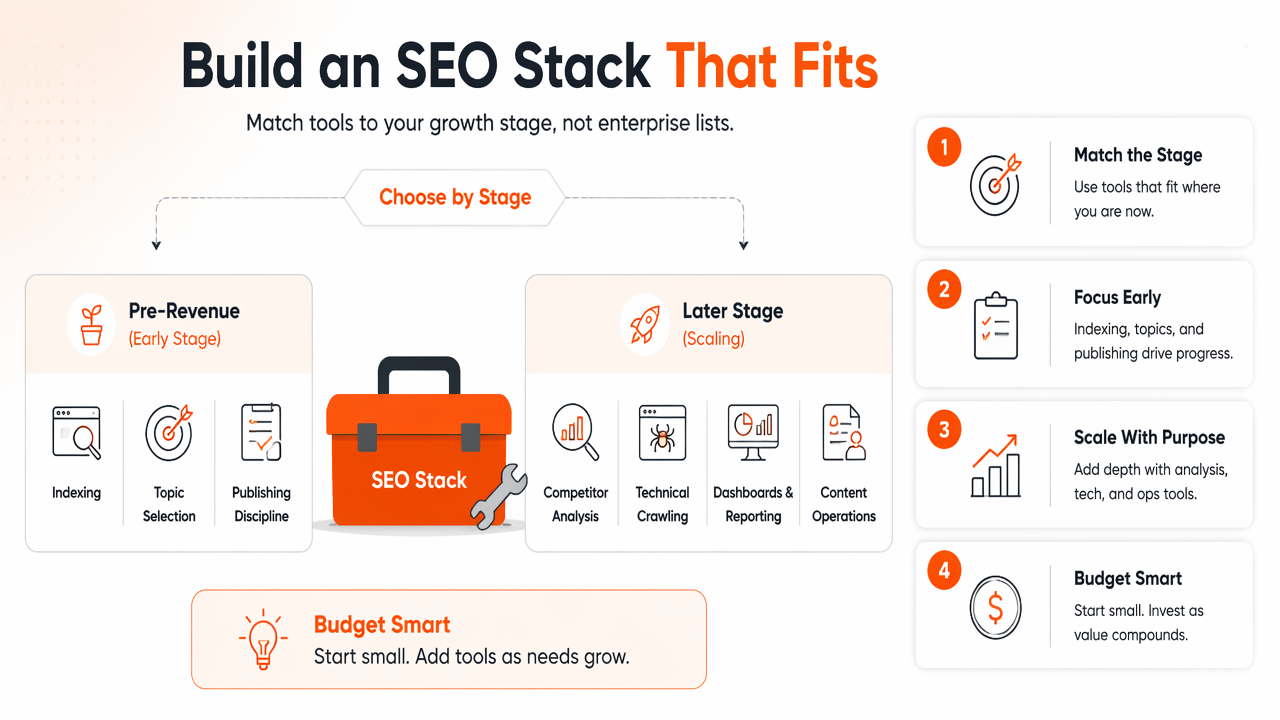
A budget-friendly stack usually works best when free data sources sit beside one paid execution layer. Google Search Console shows queries and indexing. GA4 shows behavior. A crawler finds technical issues. A workflow platform keeps the work moving.
Tool sprawl is expensive even when the tools are free, because every dashboard takes time to learn and maintain.
A simple 5-step selection process
- Define the main SEO job. Choose visibility, content output, technical cleanup, local rankings, or ecommerce discovery.
- Install free measurement first. Google Search Console and GA4 should be active before paid research tools.
- Pick one execution system. Use a tool that turns findings into tasks, briefs, fixes, or publishing workflows.
- Add research depth later. Ahrefs or Semrush makes more sense after a team has pages worth improving.
- Review monthly. Keep tools that change decisions; cancel tools that only create reports.
Documentation matters more than most founders expect. A tool with clear setup steps, integrations, and operating guidance lowers onboarding time, so startup teams should review the Earlyseo documentation before building a long SEO process around manual work.
Budget stack by startup stage
| Stage | Main SEO need | Recommended stack |
|---|---|---|
| Idea or MVP | Get indexed and validate demand | Search Console, GA4, one content workflow tool |
| First customers | Publish problem-solution pages | Earlyseo, Search Console, AnswerThePublic |
| Growth stage | Improve rankings and links | Earlyseo, Ahrefs or Semrush, Screaming Frog |
| Local expansion | Win map and city searches | BrightLocal, Search Console, review tracking |
| Ecommerce growth | Optimize collections and products | Search Console, Shopify SEO workflow, crawler |
The biggest mistake is buying a complete suite before search demand is understood. Early-stage teams usually learn faster with fewer tools and tighter publishing cycles.
Which tool categories matter first?
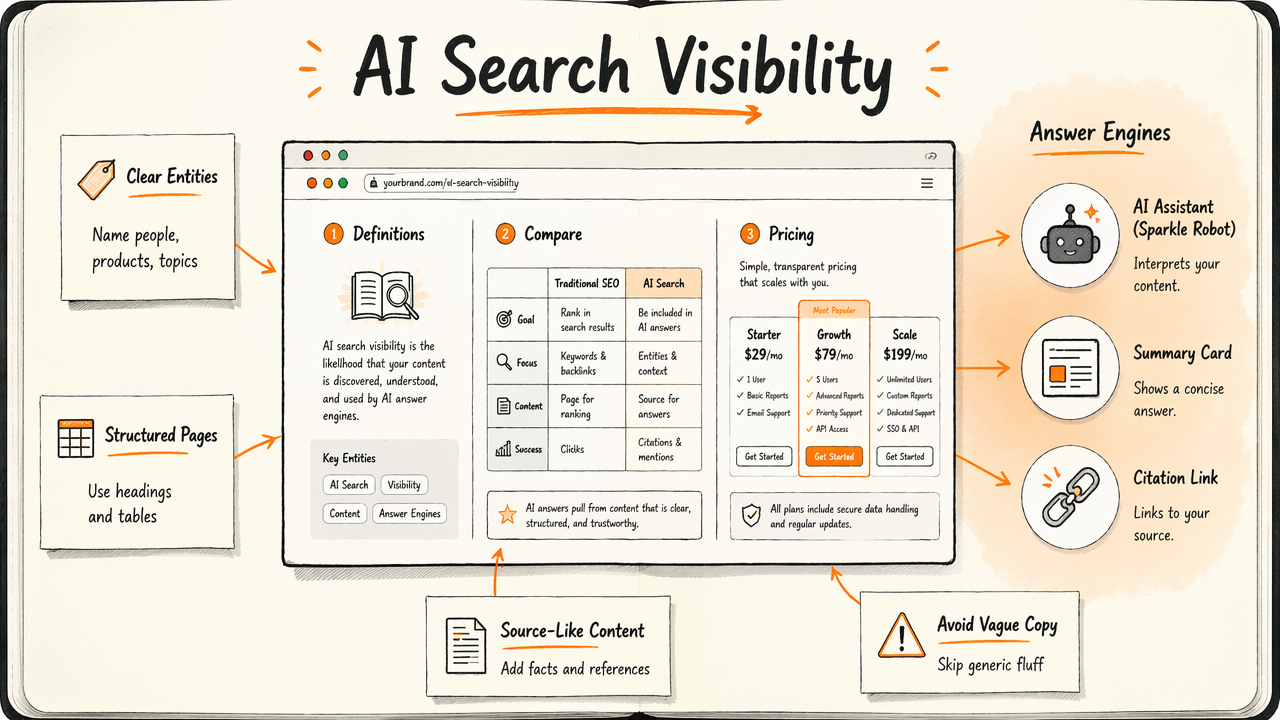
The most important SEO tool categories for startups are measurement, keyword discovery, technical auditing, content optimization, and AI-search visibility. These categories map to the real work of SEO rather than vendor feature lists.
The US Chamber article in the SERP focuses on free SEO software for small businesses, while long-form tool roundups often run far longer than needed. The practical gap for startups is prioritization: which category comes first, which waits, and which only matters after traffic arrives.
Core categories ranked by startup impact
- Measurement tools: Google Search Console and GA4 show whether pages are indexed, earning impressions, and attracting useful visitors.
- Keyword and topic tools: Ahrefs, Semrush, and AnswerThePublic help find search demand, questions, and competitor coverage.
- Technical SEO tools: Screaming Frog helps identify crawl errors, missing tags, duplicate pages, and redirect issues.
- CMS SEO plugins: Yoast SEO and Rank Math help WordPress teams manage titles, descriptions, sitemaps, and schema.
- Local SEO tools: BrightLocal fits service businesses, clinics, restaurants, agencies, and multi-location brands.
- Ecommerce SEO tools: Store teams need product, collection, and template-level optimization, especially through a dedicated Shopify SEO integration.
For most startups, measurement and execution should come before deep competitor research. Competitor data is useful, but it cannot replace publishing pages that answer real customer problems.
What to expect from SEO tools in 2027
SEO tools in 2027 will likely put more weight on AI answer visibility, structured content, and entity clarity. A 2024 IEEE Access review by Gokul Yenduri and coauthors examined GPT systems, enabling technologies, applications, challenges, and future directions, which signals why search workflows are moving beyond classic blue-link rankings: GPT review in IEEE Access.
That shift does not make traditional SEO obsolete. It makes clean structure, concise definitions, comparison tables, schema, and original expertise more valuable because AI systems need extractable answers.
Startups should prepare by adding:
- Clear definitions near the top of important pages.
- Comparison tables for alternatives, pricing, and use cases.
- FAQ sections with direct 40 to 80 word answers.
- Strong internal links between related pages.
- Fresh updates when products, features, or search behavior changes.
How Earlyseo handles startup SEO workflows
Earlyseo handles startup SEO workflows by focusing on repeatable execution: planning pages, improving content structure, supporting integrations, and helping teams make search content easier for both Google and AI answer engines to understand.
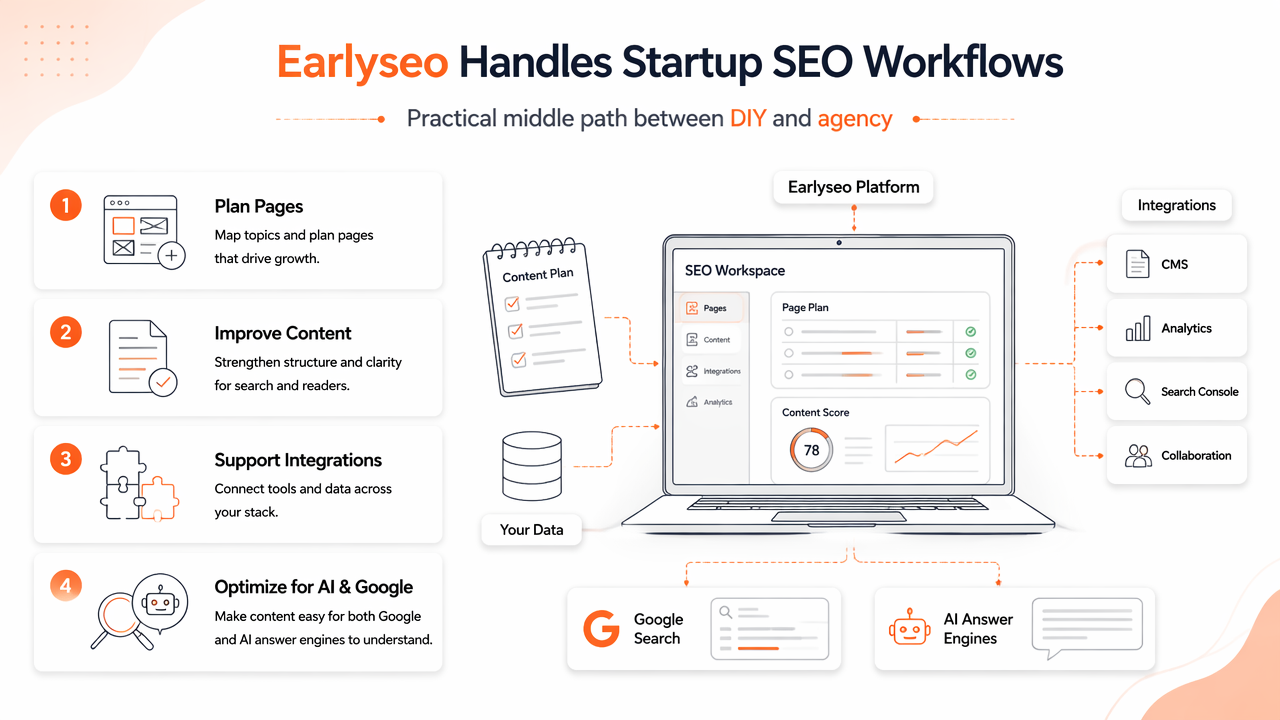
The Earlyseo platform fits teams that want a practical middle path between free tools and heavy enterprise suites. Google Search Console can show the query. A research tool can show the topic. Earlyseo helps turn that information into a structured publishing and optimization process.
Best fit: startups that need consistent SEO output but do not yet have a full SEO department.
Where Earlyseo fits beside common tools
| Need | Free or specialist tool | How Earlyseo supports the workflow |
|---|---|---|
| Find search traction | Google Search Console | Turns query opportunities into content actions |
| Publish in a CMS | WordPress or Webflow | Supports smoother site workflows through integrations |
| Optimize ecommerce pages | Shopify | Helps organize SEO work around products and collections |
| Improve AI visibility | Structured content and definitions | Encourages extractable answers, lists, and tables |
| Keep work moving | Spreadsheets or task tools | Creates a more focused SEO operating rhythm |
Teams publishing in WordPress can connect SEO work closer to the CMS through the WordPress SEO integration. Teams using modern site builders can also review the wider Earlyseo integrations to match the platform with existing publishing systems.
A good startup stack does not need to replace every familiar tool. It needs one clear place where insights become finished pages, updates, and checks.
FAQs about startup SEO tools
Startup SEO tool decisions should stay narrow until organic search becomes a repeatable channel. These common questions cover timing, budget, free tools, AI search, and when paid platforms make sense.
Can startups do SEO with only free tools?
Startups can begin SEO with only free tools if the goal is indexing, basic measurement, and early topic testing. Google Search Console, GA4, and a free CMS plugin can cover the basics. Paid tools become more useful once the company needs faster research, better workflows, competitor analysis, or repeatable content production.
Is Ahrefs or Semrush better for an early startup?
Ahrefs is often favored for backlink and competitor research, while Semrush offers a broader marketing suite with many reports. An early startup should choose either only after free measurement is active and publishing is consistent. Before that point, both tools can create more data than a small team can act on.
Do ecommerce startups need different SEO tools?
Ecommerce startups need tools that support product pages, collection pages, filters, internal links, and structured data. Search Console and GA4 remain important, but store teams also need CMS-specific workflows. A Shopify store, for example, usually benefits from SEO processes tied directly to products, collections, and templates.
How often should startup teams review SEO tools?
Startup teams should review SEO tools every month during the first year of organic growth. The review should ask whether each tool changed a decision, saved production time, or improved rankings. If a tool only creates reports that nobody acts on, the budget may be better spent on content, fixes, or distribution.
Conclusion
The best seo tools for startups form a small, clear stack: Search Console for truth, GA4 for behavior, a crawler for technical checks, one research source for demand, and a platform that turns SEO work into shipped pages. Earlyseo is built for that execution layer, especially when a team needs structure without enterprise complexity. For the next step, audit the current stack, remove one unused tool, connect the core publishing workflow, and review more practical SEO guidance on the Earlyseo blog. Startup teams ready to make SEO operational can also head to earlyseo.com and map the first 30 days around indexing, content updates, and measurable search gains.