Your personal website can outrank your startup site for branded searches, and that's often a good thing. When someone searches your name, they're looking for trust signals, proof of work, and context that social platforms rarely organize well. Search engine optimization is the practice of improving a site's visibility and performance in search results, and for founders, that means shaping what appears when people research you. On The EarlySEO Blog, this topic matters because a founder site is often the fastest SEO asset you fully control, even before your company domain has authority.
Why founder SEO is different from startup SEO
A founder personal website has a narrower job than a company site, but the stakes are high. You're not trying to rank for thousands of transactional keywords. You're trying to own searches around your name, your role, your specialty, and a few high-intent topics tied to your reputation.
Competitor content usually frames personal SEO as just a polished bio page. That's too shallow for 2026. A strong founder site should support brand searches, media checks, investor due diligence, speaking opportunities, and long-tail expertise queries such as your market, product category, or operating style.
A founder site works best when it ranks for identity first, expertise second, and distribution third.
What a founder website should rank for first
Start with queries that match how real people search:
- Your full name
- Your name + company
- Your name + title
- Your name + topic, such as SaaS, fintech, AI, DTC, or SEO
- Signature ideas you want to be known for
That focus keeps the site realistic. If your domain is new, don't chase broad head terms before you've won your branded search result.
Why content still matters on a personal site
A brochure-style site with only Home, About, and Contact rarely earns much search visibility. Research on digital content marketing by Terho, Mero, and Siutla (2022) examined how content activities affect the customer process in business markets. For founders, the lesson is practical: useful content helps people move from awareness to trust.
That doesn't mean publishing every week forever. It means building a small library of pages that answer the questions people already have about you.
For a practical baseline, pair your personal site with a clear content plan like this guide to SEO content strategy for new websites and adapt it to your name-led search goals.
The minimum viable founder site structure
Keep it simple, but don't keep it thin. A good starting structure is:
- Home page focused on your name and current role
- About page with background, focus areas, and proof
- Writing or insights hub
- Media, speaking, or press page
- Contact page with one clear next step
If you have case studies, product essays, or a portfolio, add those as separate indexable pages. They create more search entry points without turning your site into a messy archive.
Build pages that match how people research founders
Most visitors won't land on your home page first. They'll come in through a bio page, an article, a talk summary, or a press mention. That means every important page needs a clear search purpose.
The pages that deserve the most SEO attention
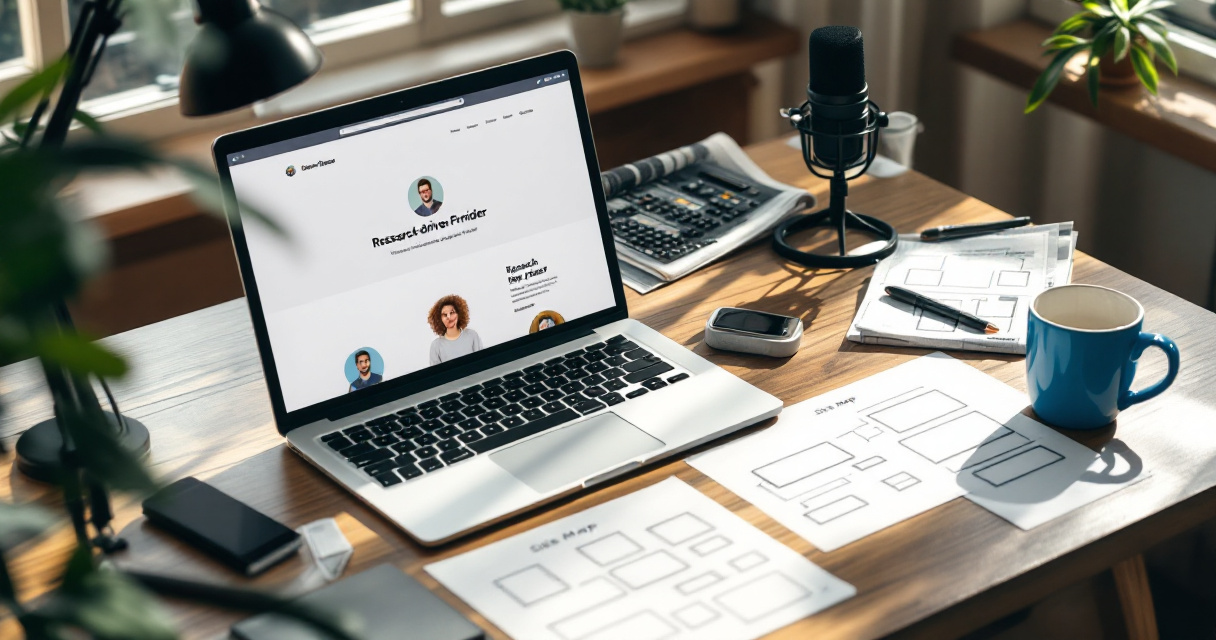
Your home page should target your name. Your about page should expand on credentials and areas of expertise. Your content hub should target the problems and ideas you want associated with your name.
Table: page goals for a founder personal website
| Page | Primary search intent | What to include |
|---|---|---|
| Home | Name search | Full name, current role, short positioning statement, featured links |
| About | Validation | Career timeline, expertise areas, companies built, media proof |
| Articles/Insights | Expertise discovery | Original thinking, lessons learned, keyword-focused titles |
| Press/Speaking | Third-party trust | Talks, podcast appearances, interview topics, headshot, bio |
| Contact | Conversion | Clear reason to reach out, email form, response expectations |
Turn your bio into a search asset
Competitors mention optimizing a bio, but they often stop at basic copywriting. Your bio should include your full name in the page title, a natural mention of your company, and the few topics you want to own. Avoid keyword stuffing. If your name is uncommon, this is easier. If your name is common, specificity matters more.
Use variants naturally:
- Full legal or public name
- Common short version
- Name + founder title
- Name + company
Publish content that compounds authority
A founder site doesn't need 50 posts. It needs 8 to 15 strong pages around recurring themes. Good examples include your approach to product, fundraising lessons, market analysis, hiring philosophy, or contrarian insights from operating the business.
If you're unsure where to start, use a lightweight publishing cadence similar to the frameworks shared on The EarlySEO Blog. A focused set of articles often beats a neglected blog with dozens of weak posts.
You can also support this with related resources like on-page SEO basics for small business sites and keyword research for low-authority websites.
How to choose founder keywords without overcomplicating it
Use one primary keyword type per page:
- Identity keyword: your name
- Authority keyword: your name + expertise
- Topic keyword: a niche subject you write about
Then add a few secondary phrases in headings, meta descriptions, image alt text, and internal links. Keep the page readable first. Personal SEO fails when the site sounds robotic.
Technical SEO that makes a small personal site punch above its weight
A founder site can win with a modest footprint if the technical basics are clean. This is where solo founders often get quick gains.
Fix the essentials before you publish more
Make sure your site is:
- Fast on mobile
- Easy to crawl
- Structured with clear heading hierarchy
- Using descriptive title tags and meta descriptions
- Secured with HTTPS
- Free of duplicate versions of key pages
Competitor articles correctly stress speed and mobile usability, and they're right. If your personal site is built on a modern stack, don't assume it's optimized by default. Heavy themes, bloated scripts, and oversized images still slow small sites down.
On a founder site, technical SEO isn't about complexity. It's about removing friction so search engines can trust and understand your pages.
Add structured data where it actually helps
Schema markup is one of the most overlooked gaps in competitor content. For founder websites, basic structured data can help search engines interpret who you are and how your pages connect.
Useful markup may include:
PersonOrganization, if your company is closely tied to your profileArticlefor blog postsBreadcrumbListfor larger personal sites
Research on information extraction by Lu, Liu, and Dai (2022) highlights how structured representation improves extraction tasks across varied content types. For SEO, the practical takeaway is simple: cleaner structure helps machines interpret entities and relationships more reliably.
Internal links matter even on five-page sites
Many founders forget this because the site feels small. Still, internal links help distribute relevance and guide users. Link your bio to your best essays. Link essays back to your speaking or press page when relevant. Link your homepage to your latest insight piece.
For examples of clean site architecture, study articles like internal linking best practices for SEO and technical SEO tips for starter websites while keeping your own structure lean.
The fastest technical checklist for founders
Before launch, check these five items:
- One canonical version of your site
- Unique title tag and meta description on every main page
- Compressed images with descriptive filenames
- XML sitemap submitted in search tools
- No accidental
noindextags on important pages
That's enough to outperform many founder sites that look nice but are invisible.
Use off-site signals to strengthen your personal search results
Google won't judge your personal website in isolation. Your broader web footprint shapes what ranks for your name.
Align LinkedIn, podcast bios, and author profiles
Competitor articles talk about LinkedIn, but the real advantage is consistency. Use the same name format, role, company reference, and short expertise statement across your personal website, LinkedIn, guest posts, and speaker bios. Mixed versions make entity understanding harder.
A useful supporting read is personal branding SEO tactics for founders, especially if you're trying to own page one for your name.
Earn the right kinds of mentions
You do not need a big PR machine. A few relevant third-party mentions can help a lot:
- Podcast guest pages
- Conference speaker pages
- Founder interviews
- Guest articles with author bios
- Community profiles on credible industry sites
The 2023 Oxford research archive entry on journalism, media, and technology trends by Newman and Cherubini reflects how discovery continues to shift across platforms. For founders, that means search visibility is increasingly shaped by a mix of owned and external profiles, not just one website.
Protect your branded search results before you need to
A founder site is also defensive SEO. If you wait until someone else ranks for your name, cleanup gets harder. Publish your core pages early, claim major profiles, and keep your bio current.
Using The EarlySEO Blog as a planning resource can help you build that footprint methodically instead of reacting after a press cycle, launch, or hiring push.
What to track if you want proof SEO is working
Don't measure success only by total traffic. For founder sites, track:
- Rankings for your name and name variations
- Clicks from branded queries
- Impressions for expertise terms
- Referral traffic from podcasts, media, and social bios
- Contact form submissions or inbound opportunities
A founder site with 300 qualified monthly visits can be far more useful than a general blog with 3,000 random clicks.
What will matter more for founder SEO in 2027
Founder SEO is moving closer to entity SEO. Search engines are getting better at connecting people, companies, topics, and citations across the web. That means consistency, structured information, and clear topical signals will matter even more next year.
Expect stronger emphasis on entity clarity
Your site should clearly answer these questions:
- Who are you?
- What do you do now?
- What have you built?
- Which topics are you credible on?
- Where else are you mentioned online?
The founders who win won't necessarily publish the most. They'll publish the clearest, most connected signals.
Small sites can still win if they're focused
This is the encouraging part. You do not need a massive media operation. You need a clean site, a few useful pages, linked profiles, and enough content depth to show expertise. That's realistic for solo founders and busy operators.
The best founder websites don't try to look like magazines. They act like trusted identity hubs with a handful of pages that answer high-intent questions.
If you're rebuilding now, keep your design light, your copy specific, and your SEO goals narrow. That's a much better bet than copying generic personal branding sites that look polished but say very little.
A practical 30-day founder SEO plan
Use this sprint:
- Publish or rewrite your home and about pages around your name
- Add one speaking or press page
- Publish two expertise articles tied to your core niche
- Clean up title tags, metadata, internal links, and schema
- Update LinkedIn and external bios to match your site
- Track branded clicks and impressions for 30 days
That's enough to create momentum without turning SEO into a full-time job.
Conclusion
A founder personal website should rank for your name, explain why you matter, and make the next action obvious. Start with identity pages, add a small set of high-signal content, clean up the technical basics, then reinforce it with consistent off-site profiles. If you want a practical place to keep sharpening that process, read more on The EarlySEO Blog and turn your personal site into an asset that attracts the right customers, hires, press, and partners.