"Near me" searches signal buying intent right now, not casual browsing. If you want to show up when someone searches for a service, store, or solution nearby, you need stronger local relevance than the business down the street. That's where local search engine optimisation comes in. Wikipedia describes it as a process that affects the visibility of a website or webpage in a search engine's unpaid results, similar to broader SEO but focused on local visibility. This guide from The EarlySEO Blog breaks down what actually helps businesses rank for "near me" searches in 2026, without outdated tricks or vague advice.
Why "near me" rankings depend on local intent, not exact-match keywords
Many businesses still think they must stuff pages with the phrase "near me" to rank for it. That's usually the wrong starting point. Google can infer local intent from the query, the searcher's device, and location signals tied to your business.
A better approach is to make your business clearly relevant to a place and a service. If you run a dentist office in Austin, Google doesn't need a dozen awkward mentions of "dentist near me." It needs confidence that your practice is real, close, trusted, and tied to that service category.
Key insight: "Near me" visibility is usually earned through proximity, relevance, and local prominence, not by forcing the keyword into every heading.
What local SEO actually covers
Local SEO overlaps with standard SEO, but the focus is narrower. You're optimizing for searches with local intent, especially on mobile, maps, and service queries tied to a city, neighborhood, or current location.
Use these signals together:
- A complete Google Business Profile
- Consistent business name, address, and phone details
- Service and location pages on your site
- Reviews and local reputation signals
- Local schema and crawlable contact details
- Links and mentions from local organizations
If you're new to foundational SEO, start with a practical guide like this SEO strategy checklist for small businesses to make sure your local work sits on solid ground.
Why 2026 is less about keywords and more about entity clarity
Search systems now connect businesses as entities, not just webpages with repeated phrases. That means your business category, location, reviews, citations, and website content should all tell the same story.
A 2023 paper in the International Journal of Information Management by Dwivedi, Kshetri, and Hughes examined the opportunities and risks of generative AI across research and practice. For SEO, the practical takeaway is simple: publishing more AI-written local pages won't help if the business signals behind them are weak or generic.
How Google interprets "near me" without the phrase on your page
Google can match a searcher's location to businesses nearby even if your page targets a city or service term instead of the literal phrase. That's why pages like "emergency plumber in Mesa" or "family dentist in North Austin" often appear for "plumber near me" and "dentist near me" searches.
Your job is to make the page specific enough to a service area, and the business profile strong enough to validate it.
Build the strongest local relevance signals on your website
Your website still matters, even if many "near me" clicks happen from map results first. Google uses your site to verify who you are, where you operate, and what you actually offer.
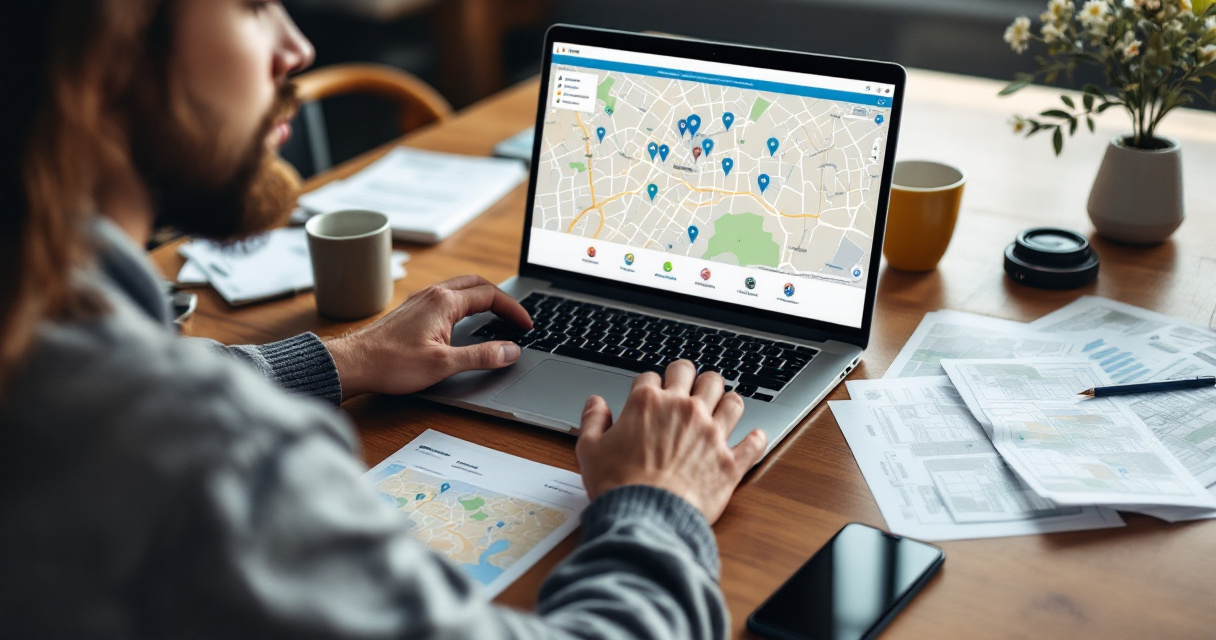
The website elements that move local rankings
Start with the basics on every important local page:
- Put your primary service and location in the title tag.
- Use a clear H1 that matches the service intent.
- Show your address, phone number, hours, and service area.
- Add unique copy about the local market, not boilerplate city swaps.
- Embed a map or clear directions if you serve customers at a physical location.
- Include trust signals, such as reviews, certifications, or local memberships.
H3: Local page setup by business type
| Business type | Best page approach | Common mistake |
|---|---|---|
| Single-location store | One strong location page plus service pages | Thin homepage with no local details |
| Multi-location brand | Separate page for each location with unique content | Copy-paste pages changing only city names |
| Service-area business | Service pages plus area pages where justified | Creating dozens of low-value suburb pages |
A lot of owners overbuild location pages before they've fixed core trust signals. That order hurts results. First make sure Google can crawl your business details and match them across your site and profile.
Add local schema, but don't expect miracles
Structured data can help search engines understand business details faster, especially your location and service type. Several top-ranking articles mention local schema, and they're right to include it. Still, schema is a support signal, not a shortcut.
Use LocalBusiness schema where appropriate, then validate that your visible page content matches it. If your schema says one address and your footer says another, you create confusion instead of clarity.
If your technical setup needs work, this technical SEO basics resource can help you tighten indexing, crawl paths, and structured data implementation.
Avoid the city-page trap that drags local performance down
Location pages should exist because you have something real to say about that market: a staffed office, a dedicated service area, customer examples, or operational details. If you're spinning out 40 pages with the same text, you're not building relevance, you're creating low-quality local duplication.
A smaller set of useful pages usually performs better than a bloated site full of near-identical local URLs.
Optimize your Google Business Profile for map pack visibility
For many "near me" searches, the map pack is the main prize. Your Google Business Profile often influences whether you appear there, how attractive your listing looks, and whether a searcher clicks, calls, or asks for directions.
What to fix first in your profile
Use a simple order of operations:
- Choose the most accurate primary category.
- Complete every core field, including hours, service areas, and business description.
- Add real photos of your location, team, products, or completed work.
- Keep your phone number and website URL current.
- Publish updates when there's a genuine reason, such as new services or seasonal changes.
Reviews are ranking fuel and conversion fuel
Reviews don't just help with trust after the click. They can strengthen local prominence signals and improve click-through when your listing appears next to competitors.
Ask customers at the right moment, right after service completion or purchase confirmation. Don't script fake-sounding language. Instead, ask for details that mention the actual service delivered.
- Ask for reviews consistently, not in random bursts
- Respond to both positive and negative feedback
- Mention service specifics in replies when appropriate
- Never gate reviews or pressure unhappy customers into silence
A profile with accurate categories, fresh photos, and steady reviews usually beats a neglected listing, even when the neglected business has an older domain.
Keep your business data consistent everywhere
Your name, address, and phone number should match across your site, profile, directories, and social platforms. Minor formatting differences aren't always fatal, but conflicting core details can weaken local trust.
This is one reason many teams use checklists and repeatable workflows from sites like The EarlySEO Blog when managing local SEO across multiple platforms.
What matters most inside the map pack
You can't fully control proximity, because that depends on the searcher. You can control relevance and prominence. Better category selection, complete service details, consistent citations, strong reviews, and a well-matched landing page all improve your odds when Google compares similar businesses nearby.
Earn local authority with citations, links, and proof of real-world presence
Once your site and profile are in shape, authority becomes the separator. Google wants signals that your business matters in the local area, not just on your own website.

Local citations still help when they confirm reality
Citations are mentions of your business details on directories, chambers of commerce pages, local news sites, and industry listings. Their value in 2026 is less about volume and more about accuracy and trust.
Go after sources that make sense:
- Local chambers and business associations
- Industry-specific directories
- Community sponsorship pages
- Local event websites
- Regional media coverage
Links that actually improve local rankings
Local backlinks often come from relationships, not outreach templates. Sponsor a neighborhood event, contribute expertise to a local publication, or partner with nearby organizations. Those mentions can send both SEO value and referral traffic.
If your content strategy is thin, building assets that deserve links helps. For example, a local keyword research guide can shape pages around the services people already search in your area.
Show evidence of being a real local business
Google and users both look for proof. That includes storefront photos, staff bios, local case studies, testimonials from nearby customers, and pages that reference genuine service areas.
Research from fields outside SEO often reinforces the broader point that credibility matters when people make high-stakes decisions. For example, the 2024 Lancet Commission report and the 2022 CDC clinical practice guideline both show how trusted, clearly presented information supports decision-making in their own domains. In local search, your equivalent is clear, verifiable business information, not hype.
The fastest authority wins for small local businesses
Most local businesses don't need a national digital PR campaign. They need 5 to 15 believable local mentions that reinforce geography, service category, and reputation. A few strong local signals can outperform dozens of low-quality directory submissions.
Track what leads to rankings, calls, and visits in 2026
Local SEO is easy to misread because rankings change by device, neighborhood, and search context. If you only check one keyword from your office, you'll get a distorted view.
Metrics that matter more than vanity rankings
Track performance in layers:
- Google Business Profile views, calls, clicks, and direction requests
- Organic traffic to location and service pages
- Form leads and phone calls by landing page
- Rankings from multiple ZIP codes or city points
- Review growth and response rate
H3: What to measure each month
| Metric | Why it matters | Good question to ask |
|---|---|---|
| Map pack visibility | Shows local search presence | Are we appearing in core service areas? |
| GBP actions | Ties visibility to intent | Are people calling or requesting directions? |
| Local page traffic | Reveals website contribution | Which location pages attract qualified visits? |
| Review velocity | Supports trust and prominence | Are new reviews arriving steadily? |
| Citation accuracy | Protects consistency | Do major listings match our site and GBP? |
What to expect next for "near me" SEO
The direction is clear: search engines are getting better at understanding entities, service intent, and real-world trust. That means generic local pages and light-effort profiles will keep losing ground.
I'd also expect more variation in results based on micro-location and user context in 2027. Businesses that invest now in stronger local data, better reviews, and clearer service pages will be in a better spot when search becomes even more personalized.
If you want a cleaner process, use resources from the The EarlySEO Blog platform to document local pages, profile updates, and internal links. A related step is improving how your pages connect internally, and this internal linking guide is a smart place to start.
A simple 90-day plan to improve "near me" visibility
Try this sequence:
- Fix your Google Business Profile and citation consistency.
- Improve your top service and location pages.
- Add local schema and stronger on-page trust signals.
- Start a steady review request process.
- Earn a handful of local mentions and links.
- Track calls, clicks, and local rankings by area.
That's usually enough to uncover your biggest gap fast.
Conclusion
Ranking for "near me" searches isn't about gaming a phrase. It's about making your business the clearest local answer for a real need. Start with your Google Business Profile, tighten your website's local signals, earn a few trusted local mentions, and measure actions that lead to revenue, not just impressions. If you want help building a repeatable local SEO system, browse more practical guides on The EarlySEO Blog and turn these steps into your next 90-day plan.